Framework-light, standards-first, research-ready websites.
Huber Digital helps humanities projects publish, preserve, and share scholarship with clarity, accessibility, and long-term sustainability.
- Web standards and accessibility for reduced complexity.
- Open standards, open access, open licensing where appropriate.
- Data, metadata, and citability are always first-class concerns.
- Design that respects researchers and audiences alike.
The Huber Digital approach
We build for scholarship, not hype. Our work blends data modelling, standards compliance, and elegant web design without heavy frameworks or costly infrastructure.
That means your project stays fast, readable, and easy to maintain long after initial funding ends.
Reduce complexity
Lean stacks, careful documentation, engaging and user-friendly design.
Respect data
Structured metadata, robust provenance, and long-term citability baked in from day one.
Design for access
Readable, inclusive interfaces that meet accessibility standards without compromise.
Plan for longevity
Flexible hosting, sustainable workflows, and future-proof delivery options.
Principles of our work
We understand humanities data is not always complete, evolving, and full of nuance. Our process honours that reality.
- Digital scholarship has no end-of-life; we build for continuity.
- Open standards, open documentation, and community knowledge come first.
- We prioritise accessibility of delivery platforms and interfaces.
- Research data and research questions always outrank the tech stack.
- We avoid tech-speak and focus on clear, actionable guidance.
- We help projects plan for growth beyond grant cycles.
Services & skills
From data modelling to delivery platforms, we help you get research online in a way that lasts.
Data & metadata
Modeling, transformation, and metadata standards for digital libraries, RDF/LOD, and semantic workflows.
Text & encoding
TEI, XML technologies, transcription workflows, and editorial pipelines aligned with scholarly standards.
Imaging & IIIF
Digitisation best practice, imaging workflows, and standards-based IIIF experiences.
Web design
Responsive HTML5/CSS3/ES6 builds with dual-mode light/dark interfaces and performance-first design.
Tools & analysis
NLP, visualisations, knowledge modelling, and statistical analysis tooling tailored to humanities research.
Infrastructure & support
Servers, domains, sustainability planning, and adaptation of open-source tools.
How we work
We meet you where your project is today, then build a realistic path to growth, publication, and impact.
Discover
Clarify research goals, audiences, data readiness, and existing infrastructure.
Model
Design metadata, standards compliance, and editorial workflows that can scale.
Build
Create fast, accessible, research-ready interfaces with lightweight tech and clear documentation.
Sustain
Plan for long-term availability, outreach, and continued scholarly value.
Training
All of our online training courses are free!
Digital Editions course
This digital editions course covers the the whole process of creating a digital edition, from selecting a text right through to publication. The training sessions are interactive, the XML sessions have exercises to complete, and many of the slides have clickable hyperlinks, sometimes embedded in images. Please send any feedback to digital@hubers.org.uk.
Course Content
- Session One. Introduction and choosing a text.
- Session Two. Digitisation – images. How to take, use, describe and share images appropriately.
- Session Three. Transcription. Editorial decisions and special characters.
- Session Four. Encoding. Introduction to XML and the Text Encoding Initiative (TEI).
- Session Five. Encoding 2. Navigating the TEI documentation. More advanced editorial encoding.
- Session Six. Quality Assurance. Tips and tricks for checking your work.
- Session Seven. Preservation. Using a repository.
- Session Eight. Publication and Dissemination.
Portfolio
A glimpse of research projects we have helped build, prioritising clarity, documentation, and inviting research experiences.
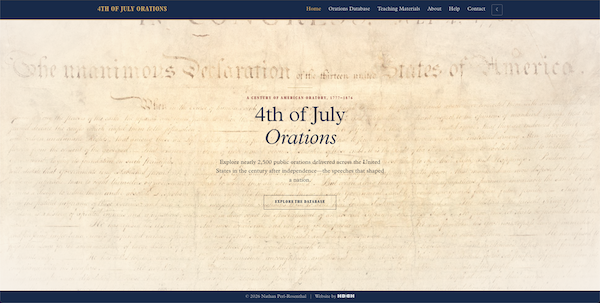
4th of July Orations
The 4th of July Orations project is led by Prof Nathan Perl-Rosenthal (Harvard University).
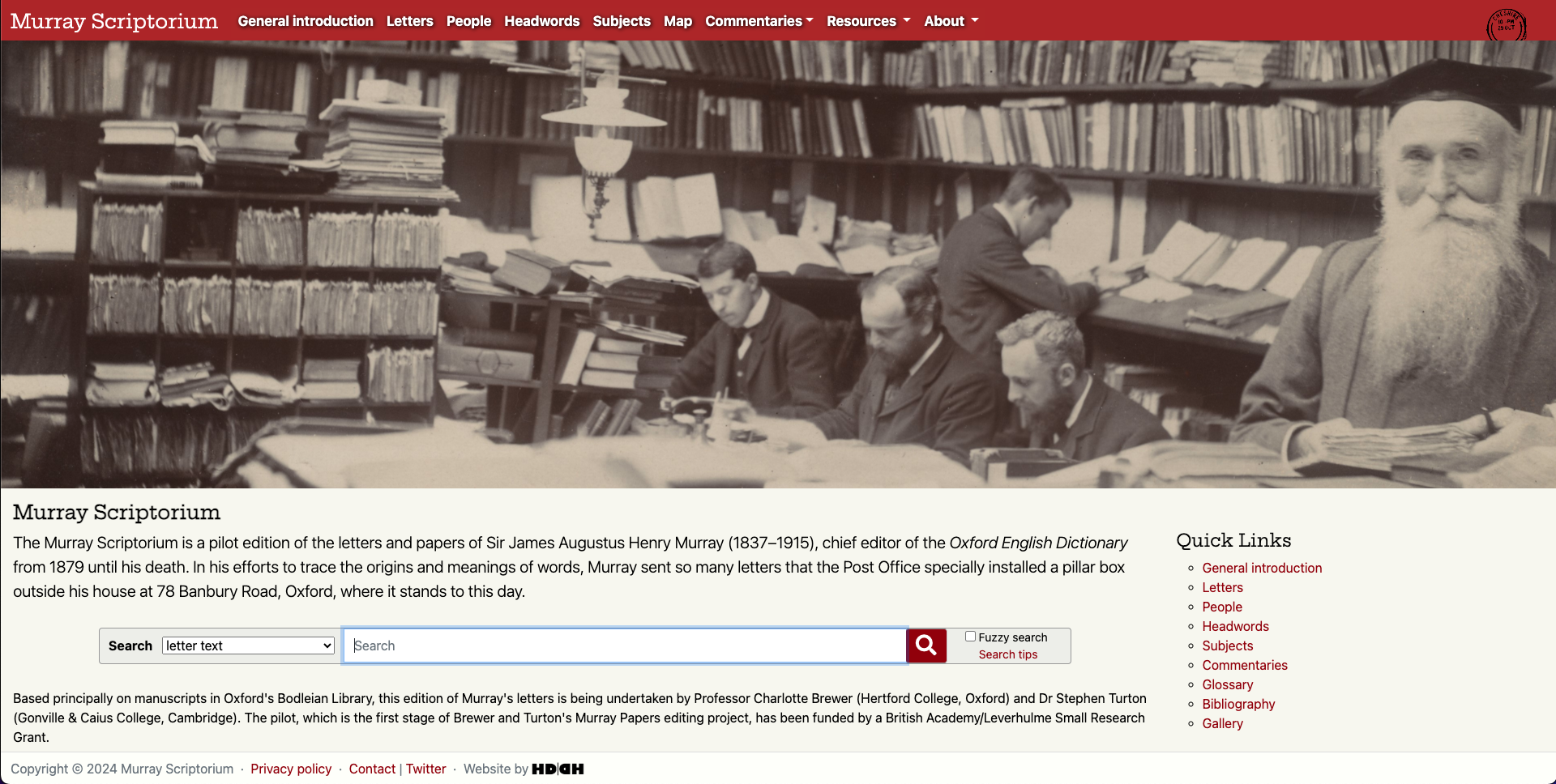
Murray Scriptorium
The Murray Scriptorium is led by Prof Charlotte Brewer (Hertford College, University of Oxford) and Dr Stephen Turton (Gonville and Caius College, University of Cambridge).
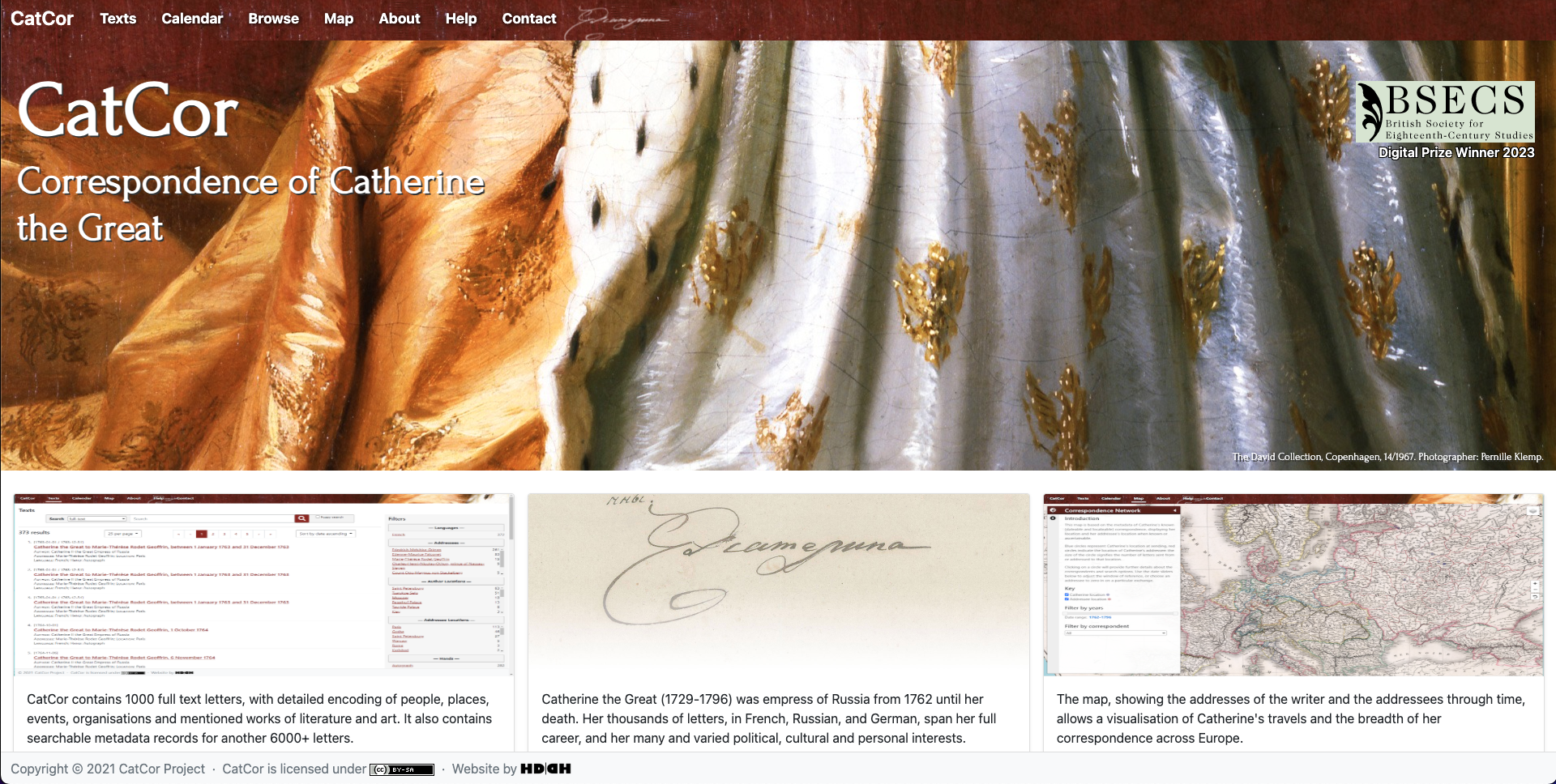
CatCor: The Correspondence of Catherine the Great
CatCor is led by Prof Andrew Kahn (St Edmund Hall, University of Oxford) and Dr Kelsey Rubin-Detlev (University of Southern California). CatCor won the 2023 BSECS Digital Prize.
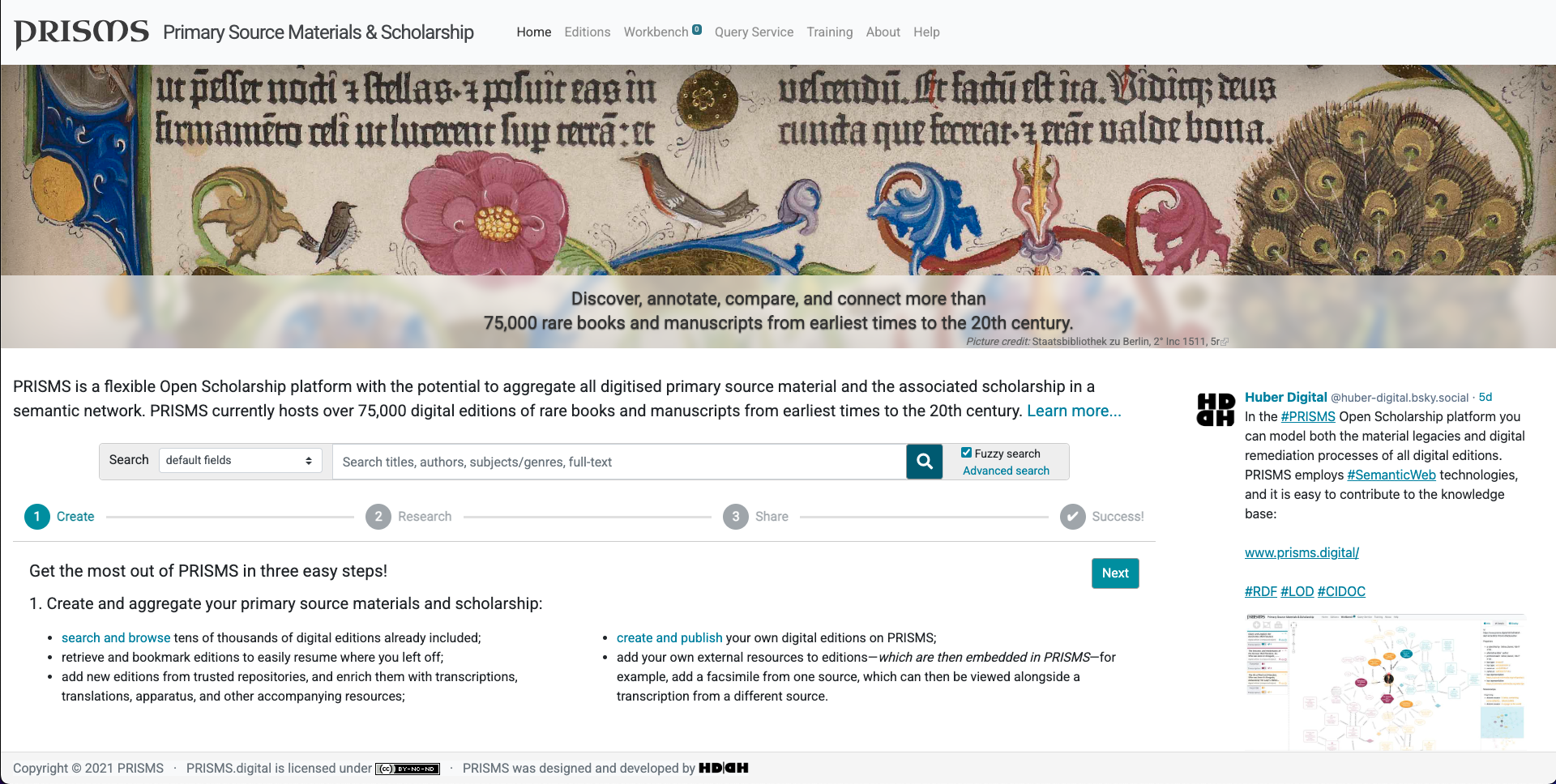
PRISMS: PRImary Source Materials and Scholarship
The Semantic Web-based PRISMS Open Scholarship and Digital Scholarly Editions platform is a Huber Digital initiative.
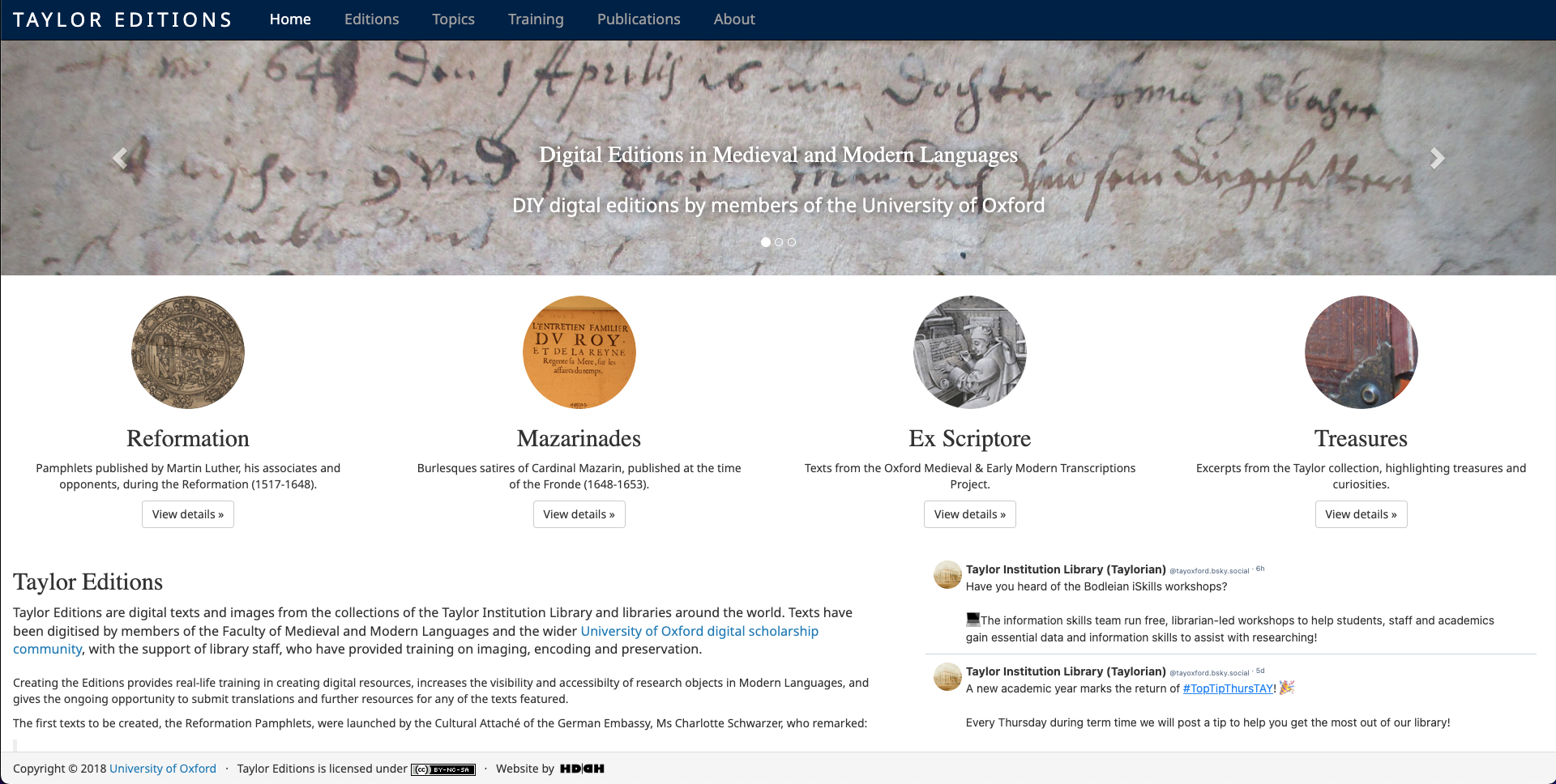
Taylor Editions
Taylor Editions was developed in partnership with the Taylor Institution Library.
Who we are
We are a team of library and information professionals with decades of experience supporting humanities research in the UK, Europe, and the US.
We advocate for the vast amount of DH work that happens outside institutional infrastructures and want to help it flourish in the open.
What we care about
- Open access to digitized historical materials.
- Teaching, training, and collaborative knowledge-sharing.
- Responsible use of AI in humanities contexts.
- Giving research long-term visibility and momentum.
- Supporting innovative research, including unfunded or minimally funded projects by students and ECRs.
Let’s build something durable.
Tell us where your project is right now. We’ll help you move from ideas to a sustainable, accessible public presence.